

Walmart Marketplace is one of the fastest-growing eCommerce platforms, yet it remains an ever-evolving landscape. To succeed, sellers need to be on top of the latest updates and tools, and that's exactly what this blog is about. However, thriving requires more than just mastering the digital side; the key lies in blending online strategies with the unique power of physical retail. Here, we break down proven strategies for maximizing growth, focusing on both the digital and in-store experiences that work hand in hand for long-term success.
1. Master Your Digital and In-Store Integration for Greater Success on Walmart Marketplace
To succeed on Walmart Marketplace, it's crucial to optimize your listings for both online visibility and in-store experience. As customers increasingly research products while shopping in-store, it’s important to align your digital and physical retail strategies. Research reveals that 81% of in-store shoppers use their phones to check Walmart’s app or website for product reviews, compare prices, and explore other products.
In addition to optimized listings, customers want to see more than just product descriptions, they want lifestyle images that show how the product fits into their everyday lives. Reviews also play a significant role in their decision-making process. By ensuring your listings are fully optimized with these elements, you'll improve both online discovery and in-store engagement.
Tip: Include lifestyle images and customer reviews in your Walmart listings, while aligning them with your in-store availability to drive both online and in-store success.
👉 Learn how to optimize your product listings on Walmart Marketplace
%25203.01.26%25E2%2580%25AFp.m..png)
2. Harness AI-Driven Personalization to Boost Product Discovery
Walmart is using AI-powered tools like Sparky, its intelligent assistant, to create highly personalized shopping experiences within its own ecosystem. Sparky uses conversational AI to recommend relevant products based on user preferences and browsing behavior, helping shoppers quickly find what they need and driving higher engagement and conversion.
In addition, Walmart leverages large language models (LLMs) in partnership with Google to refine on-site product recommendations and improve the in-app and online experience. To take advantage of these AI-driven touchpoints, brands need to optimize their product detail pages with clear, structured, and accurate content that aligns with how these tools interpret and surface products.
Tip: Focus on clear, well-structured product listings: titles, attributes, and descriptions, so Walmart’s AI tools like Sparky can easily understand, index, and recommend your products.
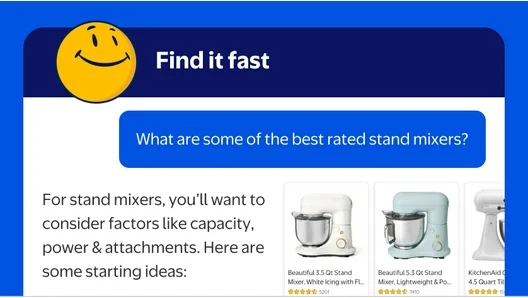
3. Revolutionizing Shopping with AI: Walmart and Google’s New Personalized Experience

Walmart and Google have teamed up to create a new, AI-enabled shopping experience that extends product discovery beyond Walmart’s own platforms. By integrating Google’s Gemini with Walmart’s vast product catalog, shoppers can discover Walmart and Sam’s Club products directly through their everyday interactions with Google.
Gemini can surface relevant items based on user queries and real-life needs, like planning a camping trip or stocking up for back-to-school, while also tailoring suggestions using customers’ previous purchases. When shoppers link their Walmart or Sam’s Club accounts, the experience becomes even more seamless, with features like unified carts and faster delivery options for Walmart+ members.
Tip: Ensure your products are well-positioned for off-platform discovery by maintaining accurate, keyword-rich content and complete attribute data, so they remain visible and relevant as AI-driven shopping journeys increasingly begin outside Walmart’s own channels.
👉🏻 Discover how Walmart and Google’s AI-driven shopping experience works
4. Optimize Listings and Content for Maximum Discoverability
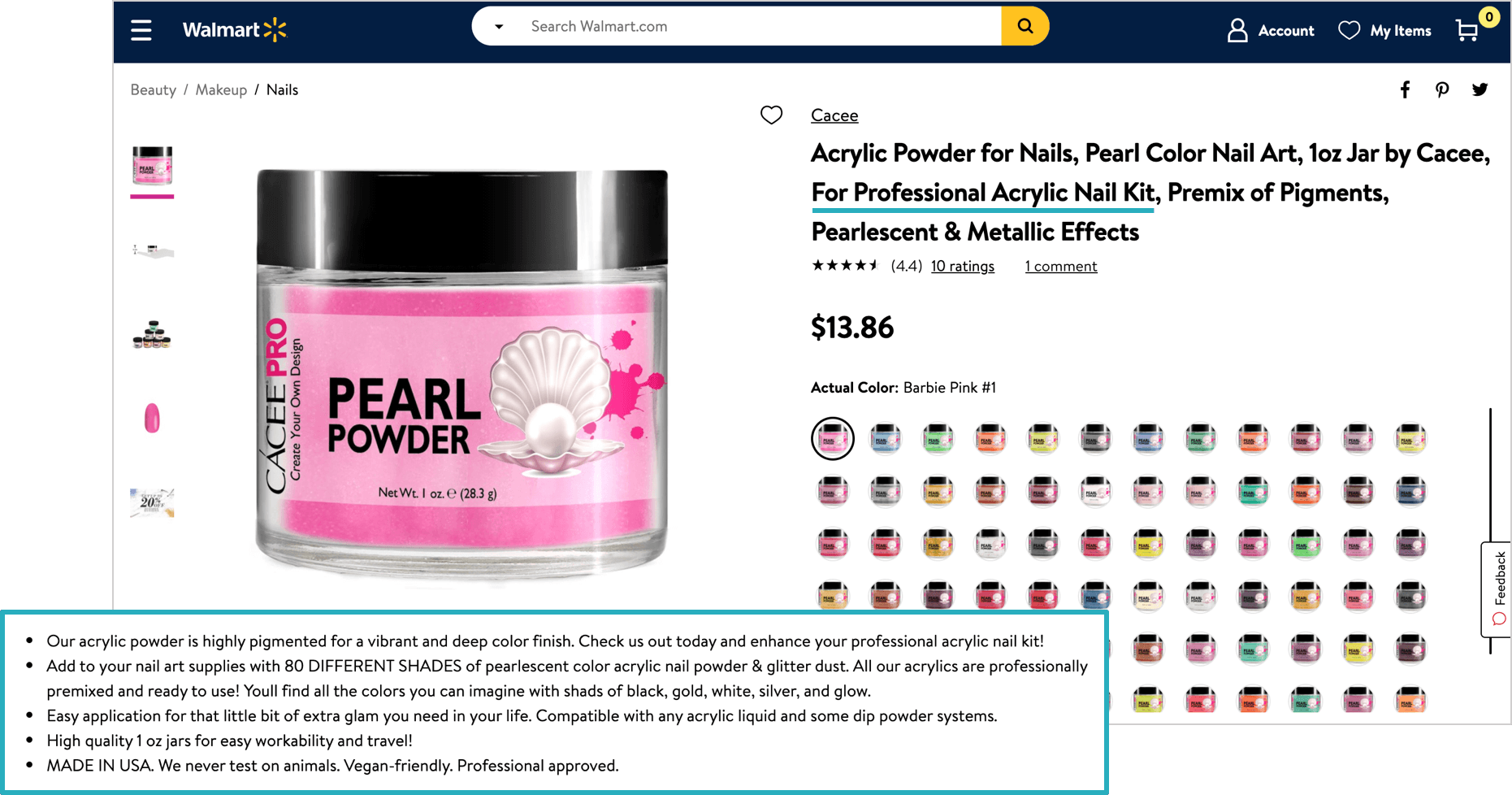
Listing optimization is not only about having clear titles and descriptions. It's about understanding the taxonomy and category paths that will help your products rank well on Walmart’s platform. Using the correct product types and category paths ensures that your listings show up in the right search results.
Discoverability is crucial. Make sure your product listings are aligned with the appropriate search terms, product types, and categories. For example, if you’re selling a food processor, you’ll need to categorize it under the relevant product type to ensure it’s visible to customers searching for related terms like “vegetable chopper” or “food chopper.”
Additionally, brands should ensure that their content quality score (for 1P vendors) and listing quality score (for 3P sellers) are high, as these scores directly impact search visibility and overall performance.
Tip: Review your product types and category paths to ensure they align with the search terms your target customers use. This improves your ranking and visibility.
5. Use Data Insights to Improve Your Strategy and Track Performance
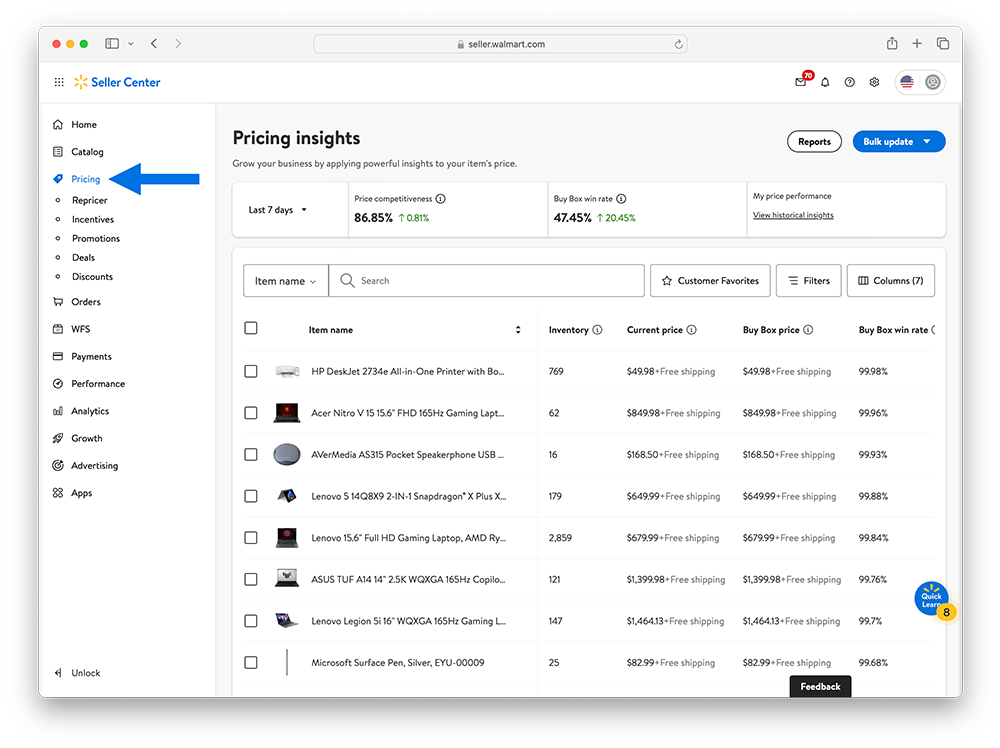
Walmart provides powerful analytics tools that allow brands to track key metrics like sales, impressions, clicks, and conversions. By analyzing these metrics, you can identify areas for improvement and adjust your listings, content, and advertising strategies accordingly.
- Sales & Impressions: Monitor the visibility of your products. If you’re getting impressions but not sales, it could indicate that your listings or pricing need adjustment.
- Conversion Rates: If your products are getting traffic but not converting, evaluate your product pages and customer feedback to identify potential issues.
- Customer Demographics: Use this data to understand your audience better and optimize your ads and product offerings to target the right customer segments.
Tracking performance using Walmart’s Seller Center and other data tools ensures that your strategies evolve in real-time, enabling you to make informed decisions that lead to greater success.
Tip: Regularly analyze your performance data to refine your strategies. Identify which products perform best and adjust your campaigns to optimize sales.
Conclusion: Position Your Brand for Long-Term Growth on Walmart Marketplace
Achieving success on Walmart Marketplace requires more than just listing products, it’s about integrating your digital strategy with in-store operations. By optimizing listings, using Walmart’s advertising tools, and leveraging data insights, your brand can drive growth both online and in-store.
Monitor performance, improve your content, and use Walmart’s AI-driven tools to stay competitive. With the right approach, your brand can thrive in Walmart’s dynamic marketplace.