
Most compliance problems on Walmart Marketplace start with a setup shortcut, not a deliberate policy violation. The most common Walmart new seller mistakes, such as a rushed category choice, attribute values copied from another channel, or a price that looked fine on paper, can each unpublish a Walmart product listing before it earns a single sale.
If you are working through your first 90 days as a Walmart Marketplace new seller, these flags are the quiet blockers that stall momentum without much warning. This guide explains what a compliance flag is, why it carries more weight for a new account, what changed in Walmart's item setup heading into 2026, and the seven setup mistakes that trigger flags most often, along with the specific fix for each one so you can resolve issues before they reach your account standing.
What Is a Walmart Compliance Flag?
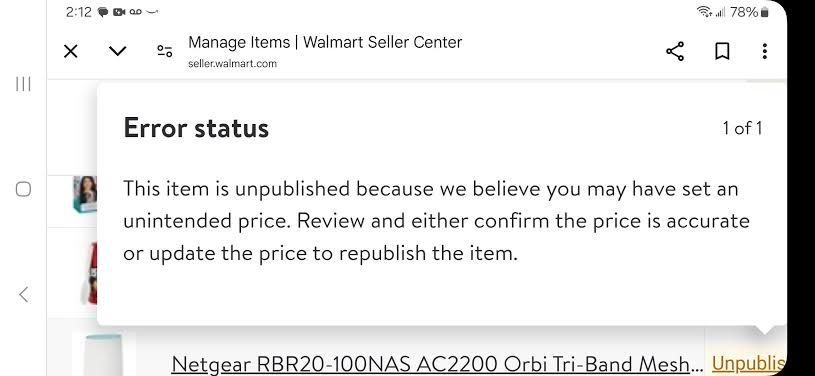
A Walmart compliance flag is an automated or manual signal in Walmart Seller Center showing that an item, offer, or account detail does not meet Walmart's standards. Depending on the issue, the flag can block content updates, remove Buy Box eligibility, or unpublish the item from Walmart.com until the seller corrects it.
Most flags appear at the item level first. Walmart lists affected items on the Unpublished Items dashboard and in the Item Report, each with a reason code that points to the cause, such as a missing primary image, an invalid product ID, or a price that fails the pricing rule. Content issues surface separately in the Listing Quality dashboard.
A flag is not a suspension. It is an early warning. Walmart's pricing guidance states that failing to follow its pricing rules or retailer policies may result in account suspension or termination, which is why resolving flags quickly matters more than resolving them perfectly.
Why Do Compliance Flags Matter for a Walmart Marketplace Seller?
For an established account, one unpublished SKU is an inconvenience. For a new Walmart marketplace seller, it can erase a large share of early momentum, because Walmart uses historical performance data to rank listings. Three consequences show up fast.
Lost visibility. An unpublished item earns no impressions, clicks, or conversions, so it builds no history while competing listings keep compounding theirs.
Lost Walmart Buy Box eligibility. When an offer is priced well above market references but not high enough to unpublish, Walmart can remove the Add to Cart button and offer details from the item page. Shoppers can still buy through More Seller Options, but few take the extra step.
Enforcement risk. Walmart takes marketplace integrity seriously. David Milstein, SellCord co-founder, noted on The Marketplace Code that Walmart removed over $100 million in GMV in 2025 from sellers offering counterfeit products or acting as unauthorized resellers in consumables. A new account that ignores early flags sits closer to that line than it realizes.
What Changed for Walmart Sellers Heading Into 2026
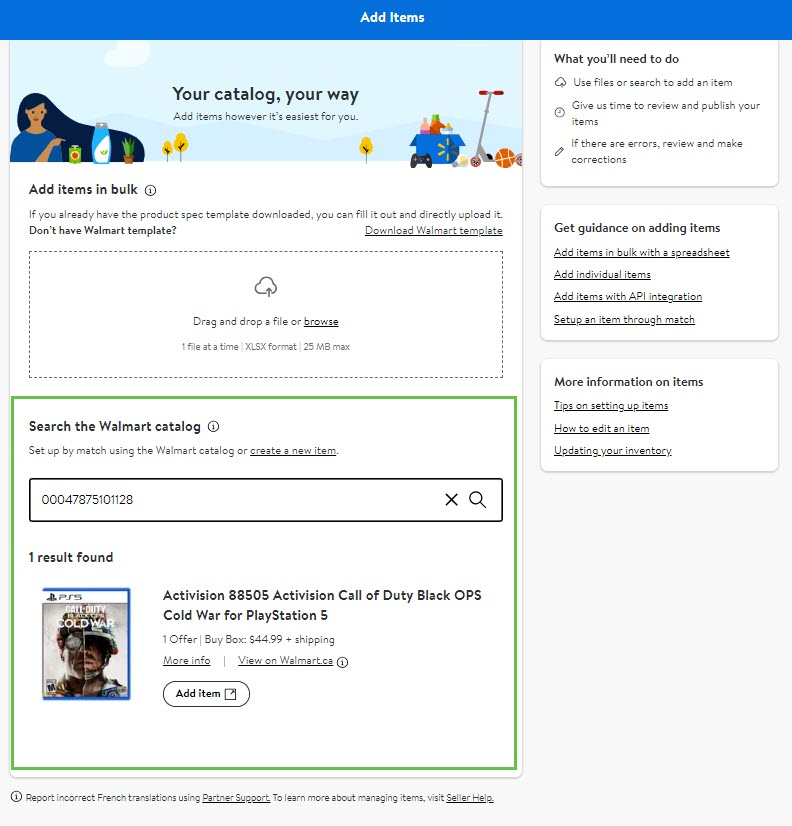
Walmart rebuilt how items are classified. In 2022, item setup relied on 26 broad categories, many carrying attributes that did not apply to the product being listed. Walmart then moved to 73 subcategories, and the current item spec goes much further, with more than 500 product type groups and 6,500 product type attributes, each vetted for relevance to a specific product type.
That precision helps discoverability, but it raises the cost of a wrong classification, because product type now decides which attributes you are asked to complete. For any Walmart 2026 launch, product type is the first compliance decision you make. Walmart reports that items set up on the new spec average a 15% content quality score improvement over the previous version.
Seller Center also added GenAI content tools built to follow Walmart's style guides and compliance rules. Items using GenAI recommendations see their content quality score rise more than 10% on average, and the bulk version can optimize up to 20 items in about 10 seconds.
Seven Walmart New Seller Mistakes That Trigger Compliance Flags
1. Registering With Business Details That Do Not Match
Walmart wants to onboard quality sellers, so registration includes checks on who you are. SellCord's Jason Magee describes two common triggers. The first is a business name that resembles an existing company: register as Acme Co while another Acme already sells on the platform, and Walmart may ask whether the two are related. The second is an address mismatch, such as accidentally entering a secondary office address instead of your headquarters.
Neither situation is a violation, and both have a simple explanation, but they must be resolved before your account moves forward.
- Use your exact legal business name and headquarters address.
- Keep contact details consistent across every field in Seller Center.
- Answer verification questions promptly, with documentation ready.
Walmart's business development team supports new sellers through onboarding, and SellCord works with that team directly, so questions get answered instead of disappearing into a black hole.
2. Choosing the Wrong Product Type and Category Path
Categorization is typically the most impactful piece of your setup, and it is the step new sellers rush most. Product type determines which attributes Walmart requests, which content standards apply, and where the item appears on Walmart.com. A wrong choice can hide the specs shoppers filter by or send the item to the wrong shelf entirely.
The fix is research, not guesswork. Search your top keyword on Walmart.com, open the leading listings, and note their product type and category path. Match yours to theirs, then confirm your primary keywords appear in the title. If you use the GenAI tool during item setup, verify the product type it suggests before you continue. Our guide to Walmart category placement and product type covers how to choose the right path for competitive keywords.
3. Copying Amazon Listings Straight Into Walmart Attribute Fields
Brands expanding from Amazon to Walmart Marketplace often paste existing content into Walmart's fields. The problem is that Walmart uses controlled attribute values. Walmart uses "male" and "female," for example, not "men" and "women." A value that does not match Walmart's front-end dropdowns can break the connection between a shopper's search and your item.
SellCord has seen this firsthand. A seller listing a men's shirt could not rank for its target keyword because the gender attribute was set to unisex on the back end. The listing looked fine to shoppers, yet the mismatch kept it out of relevant results.
- Map every attribute to Walmart's dropdown values, not your own naming.
- Complete as many attributes as possible, ideally all of them.
- Recheck gender, size, and count values before submitting.
4. Uploading an Outdated Item Spec File
Many new sellers download a spec template once, save it to the desktop, and reuse it for every upload. That template may already be out of date. Walmart advises Seller Center users to download the latest spec rather than relying on a saved copy. The single-item and bulk experiences in Seller Center prompt the newest version automatically, while sellers connected through the API need to migrate to the latest item setup API.
An old spec can request the wrong attributes or miss product type fields entirely, producing content that fails Walmart's standards for that product type. Those issues appear as flags in the Listing Quality dashboard.
- Download a fresh spec before every bulk upload.
- Confirm your solution provider has migrated to the current spec.
- Clear open Listing Quality flags before adding new SKUs.
5. Pricing Above Walmart's Reasonable Price Threshold
Walmart runs an automated Pricing Rule that unpublishes offers priced egregiously higher than prices currently or recently offered for the same item on Walmart.com or a competing website. The review covers both item price and shipping fee, and affected items show the reason code Reasonable Price Not Satisfied in the Item Report.
Walmart builds a competitive reference price from competitor websites, historical selling price, the Buy Box winner price, average offer price, and Walmart ecommerce and store prices. Once your price falls back in line, Walmart typically republishes the offer within 48 hours. Walmart's pricing rules guide also covers the softer outcome described earlier, where a high price removes the Add to Cart button without unpublishing the item.
- Subscribe to Seller Center notifications so pricing flags reach your inbox.
- Use Repricer to enable automatic price adjustments.
- Watch for prices that are erroneously low, which Walmart may also unpublish.
6. Overloading Shipping Templates With Excessive Fees
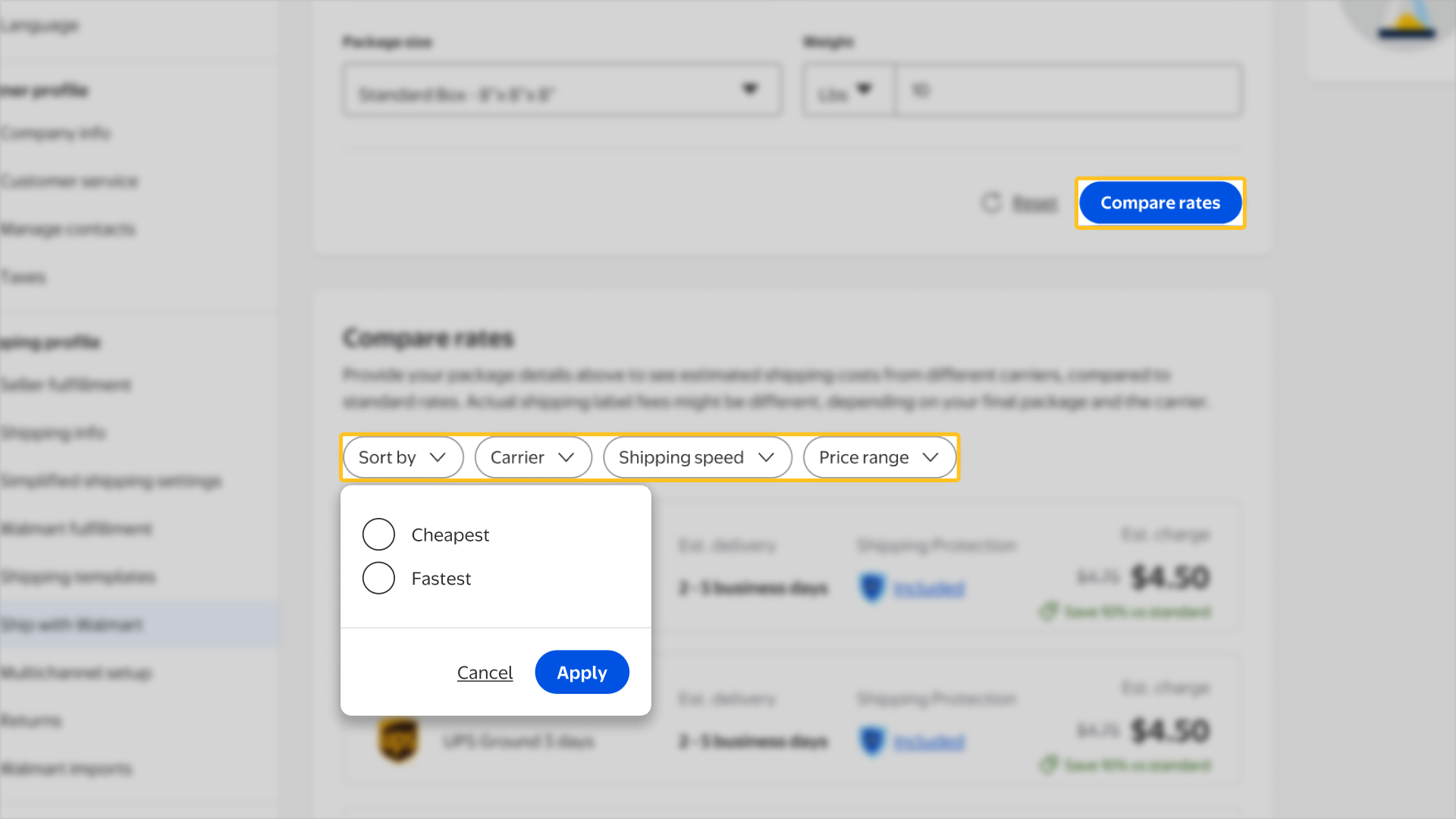
Some new sellers protect margin by raising shipping fees instead of item price. Walmart's Egregious Shipping Cost rule watches for exactly that, measuring shipping price relative to item price. Offers with extremely high shipping fees can be unpublished or made ineligible for the Buy Box.
The risk is higher inside the shipping template itself. If you try to add a shipping cost that exceeds Walmart's allowed limit, the upload is rejected and your account may be suspended. Templates are also limited to 10 shipping cost edits per day. Exceeding that locks the template for 24 hours, which can leave a pricing problem unresolved for a full day.
- Keep shipping fees reasonable relative to item price.
- Batch template changes to stay under the daily edit limit.
7. Listing Brands Without Content Ownership or Authorization
Walmart runs a unified catalog, so several sellers can list the same item and suggest content for it. Walmart gives priority to content from brand owners and authorized resellers, and sellers without either status cannot update some content fields, including blank ones.
Brand owners with an active USPTO trademark should register in Walmart Brand Portal, which grants content ownership and is also required to run Sponsored Brands and Sponsored Videos campaigns. Resellers can apply for authorized reseller privileges through Brand Manager in Seller Center or ask the brand owner to add their seller ID in Brand Portal. Walmart's content errors guide lists every path.
David Milstein recommends playing defense: complete every attribute before other sellers can add theirs, so you keep content rights on your listing. For a Walmart third party seller of other brands, documented authorization separates a healthy account from an authenticity problem.
Common Walmart Compliance Mistakes to Avoid After Launch
Fixing setup errors is only half the job. These habits create new flags once the account is live.
Ignoring the Unpublished Items dashboard. Flags rarely announce themselves, so review the dashboard and Item Report weekly.
Assuming a strong listing quality score covers policy. A score above 80 makes an item relevant enough to drive traffic, but post-purchase quality also weighs defects, adherence to policies, and how you answer customer questions.
Sourcing reviews from unapproved channels. Walmart imports reviews only from trusted, verifiable sources, so keep every review program on approved channels.
Treating content as finished. Specs, attributes, and AI tools keep evolving, and our Walmart AI optimization guide shows how to keep listings current without creating new compliance gaps.
Waiting for a flag to escalate. Every unresolved flag adds risk to your account standing, and repeated violations are what turn item-level warnings into account-level action.
Frequently Asked Questions About Walmart Compliance Flags
What triggers a compliance flag on Walmart Marketplace?
Most flags come from setup and offer issues rather than intentional violations. Common triggers include a missing primary image, an invalid product ID, attribute values that do not match Walmart's standards, a price that fails the Pricing Rule, and excessive shipping fees. Walmart shows each affected item on the Unpublished Items dashboard with a reason code, so the first step is always reading that code before changing anything.
Can I copy my Amazon listings to Walmart?
You can reuse product information, but not as-is. Walmart uses controlled attribute values that often differ from other channels, such as "male" and "female" instead of "men" and "women." Values that do not match Walmart's dropdowns can weaken search relevance. Rewrite titles to follow Walmart's style guides, map every attribute to Walmart's values, and complete as many attributes as possible before submitting.
Why is Walmart asking questions about my business during registration?
Walmart reviews new accounts to make sure it onboards quality sellers. Questions usually come from details that need clarification, such as a business name similar to another registered company or an address that differs from your headquarters. These situations are explainable, but they must be resolved before your account moves forward. Respond with accurate documentation, and lean on Walmart's business development team or your agency partner to keep the process moving.
How do I protect my Walmart listing content from other sellers?
Register your brand in Walmart Brand Portal if you hold an active USPTO trademark. Brand owners and authorized resellers receive content priority in Walmart's unified catalog, and other sellers cannot edit certain fields without those privileges. Complete every attribute early, too, so other sellers cannot add their own values first. Resellers should secure authorization from the brand owner through Brand Manager or Brand Portal.
Does a high listing quality score protect me from compliance flags?
No. A listing quality score above 80 makes an item relevant enough to drive traffic, but it does not override Walmart's policies. An item can score well and still be unpublished for a pricing or shipping rule violation. Post-purchase quality, including defects, policy adherence, and answers to customer questions, also feeds the score, so compliance and listing quality move together.
Conclusion
Compliance flags are rarely random. They trace back to a short list of setup decisions: business details, product type, attribute values, spec files, pricing, shipping, and content ownership. Get those right before launch and most Walmart new seller mistakes never reach the Unpublished Items dashboard. Check reason codes weekly, resolve flags early, and keep your Walmart seller account clear of avoidable risk. For more playbooks on building a compliant, high-ranking catalog, explore the SellCord Walmart Marketplace blog.
Want expert help keeping your Walmart listings compliant? SellCord's team of Walmart specialists is ready to help you catch compliance flags before they cost you sales, and if a flag ever escalates, our 👉🏻Walmart account reinstatement services manage the recovery so you can get back to selling.