
If you have been selling on walmart marketplace for a few years, you have probably watched your sales increase year-over-year without doing that much differently. That is not luck. Walmart has been investing heavily in its ecommerce infrastructure, and sellers on the platform have benefited. But the nature of what drives growth on both Walmart and Amazon is shifting faster in 2026 than at any point in recent memory.
The shopper journey is different now. AI tools have changed how people search, discover, and decide on both platforms. The brands winning on walmart.com and Amazon today are the ones that understand those changes and have adjusted how they approach listings, content, advertising, and customer retention. This post draws directly from a live webinar SellCord hosted alongside Sam Lee, VP at Trivium Group, covering what sellers on both Walmart and Amazon need to do differently in 2026. Here is what the conversation surfaced. [If you want a platform-level breakdown of fees, seller structures, and competition, see our walmart marketplace vs amazon comparison.
The Two Platforms by the Numbers: Why Both Still Matter
People tend to write off Walmart in their ecommerce strategy. That is a mistake. Walmart remains a Fortune One company, the largest revenue company in the world for the past 20 to 30 years. Amazon is right on its coattails, which is largely what pushed Walmart to invest so aggressively in its digital business. Global ecommerce at Walmart has posted double-digit growth every quarter for several years running.
One of Walmart's biggest structural advantages is its omnichannel presence. Amazon is primarily an ecommerce business. Walmart is predominantly a physical retail business that is also building a fast-growing digital one, which gives it pickup, same-day delivery, and ship-from-store capabilities no pure-play ecommerce company can match.
On the Amazon side, growth is coming from different places: expanding advertising revenue, increasing Prime member benefits, new ad inventory channels including a partnership with Netflix, and a third-party seller mix that now sits at 62% of units sold versus 38% first-party. Both platforms are growing. Both reward sellers who understand how they work.
AI Is Reshaping How Shoppers Find Products on Both Platforms
The biggest shift affecting Walmart and Amazon right now is behavioral. Shoppers are no longer typing two keywords into a search bar and picking the first result. The journey from "I want something" to "I bought it" looks completely different for a growing number of buyers.
Here is how that journey has changed:
%252011.26.11%25E2%2580%25AFa.m..png)
The shopper may encounter a brand on TikTok before they even know they want the product, then ask ChatGPT or Gemini for recommendations using a specific multi-criteria question, then see a sponsored ad, then land on a listing that either closes the sale or loses it. The funnel has more steps, but it can actually move faster because AI pre-qualifies intent before the shopper even reaches a platform.
One data point that illustrates how early we are in this shift: around August 2025, roughly 1% of all Walmart.com traffic was already coming from ChatGPT, at the very beginning of Walmart's OpenAI partnership. That number is only going in one direction.
Sparky vs. Alexa for Shopping: What Every Seller Needs to Know
Both platforms now have AI assistants sitting between shoppers and search results. Understanding how each one works tells you exactly where to focus your optimization effort.
What Walmart's Sparky Means for Your Listings
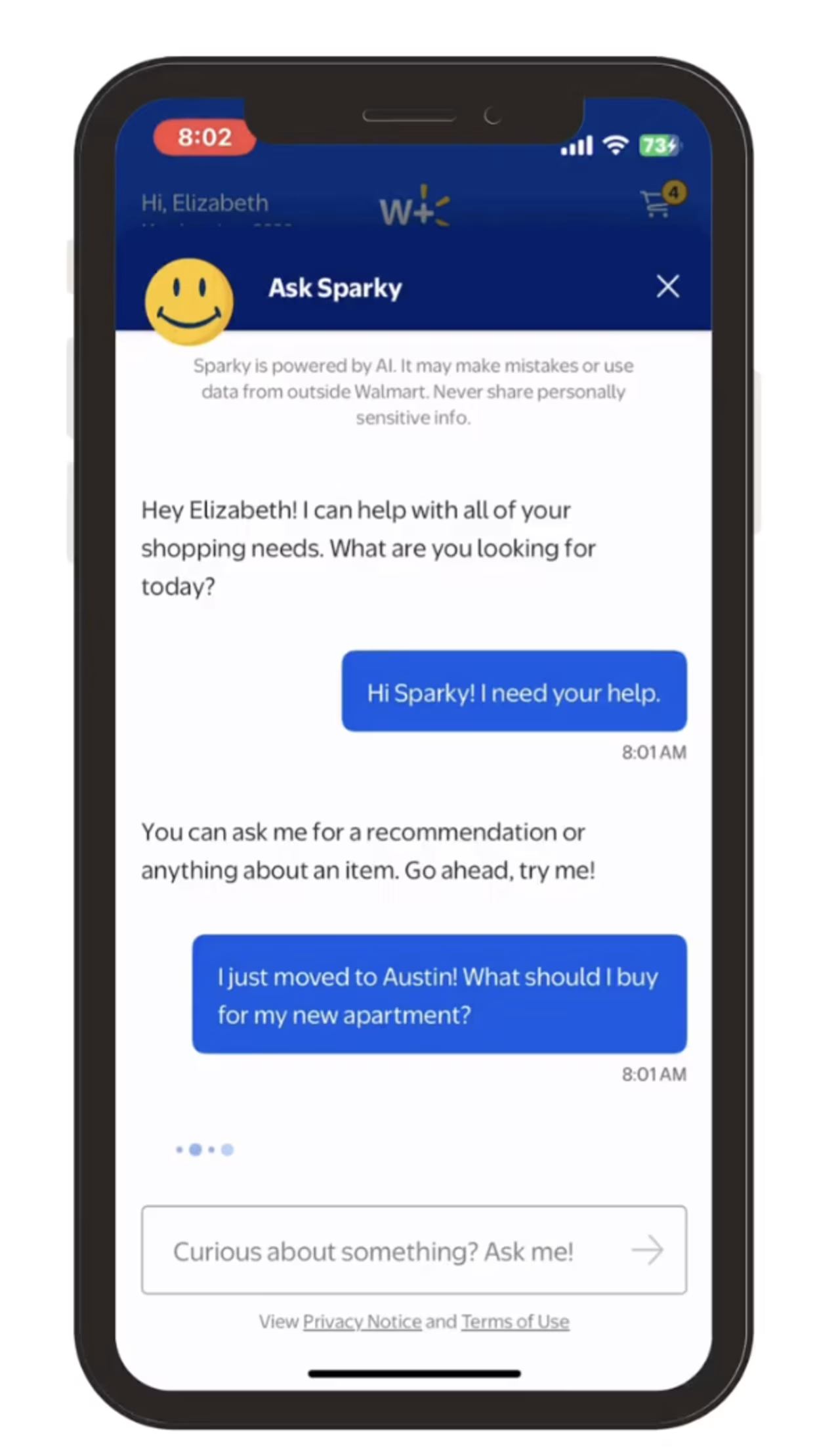
Sparky is Walmart's on-site AI assistant, accessible through the Walmart app and walmart.com. It runs on Walmart's own data: your listing score, attributes, categorization, image count, conversion history, and sales data. That distinction matters. Sparky has access to more Walmart-specific data than any external AI tool. Any outside AI, whether ChatGPT or Gemini, only gets what Walmart chooses to share. Sparky is working with everything.
What Sparky looks at: Is your walmart listing quality score strong? Are your attributes filled in completely? Are you categorized correctly? Do you meet Walmart's style guide compliance? Do you have the right image count? It is not reading what your images say. It just cares that they are there. The takeaway: if you are already doing well in traditional walmart ecommerce search, you already have a head start on Sparky. Strong fundamentals translate directly.
Walmart also built Marty, an internal AI tool for sellers. Where Sparky faces the customer, Marty faces you: keyword ideas, listing guidance, insights on what to change. They are two sides of the same system.
How Amazon's Alexa for Shopping Differs
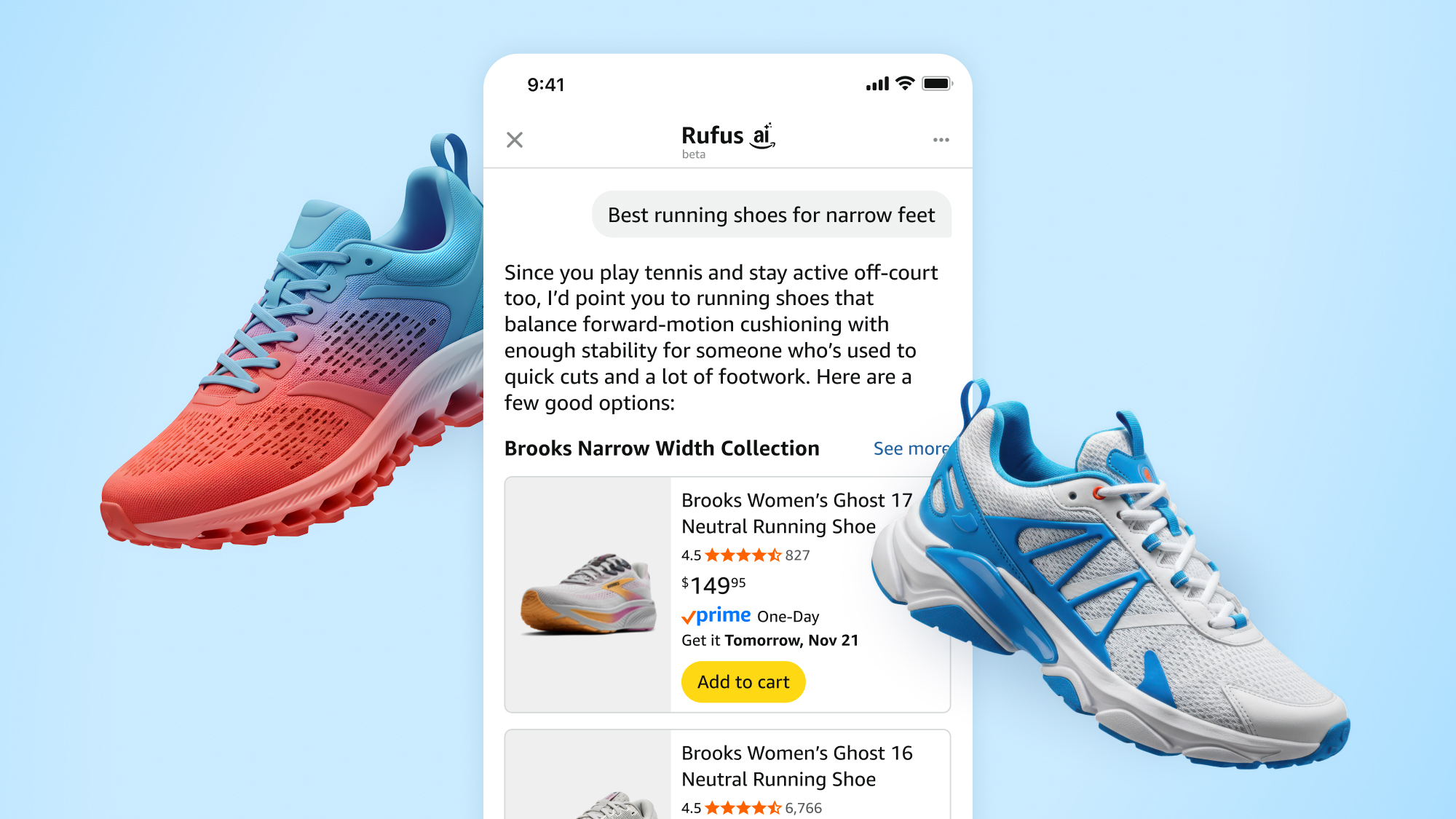
Amazon recently rebranded its Rufus AI assistant as Alexa for Shopping, a change that happened in May 2026. The rebrand matters practically: shoppers know Alexa, they trust her, and the new version is far more prominent inside the Amazon app. Where Rufus was accessible but easy to ignore, Alexa for Shopping now pops up and asks you questions. Sam's view from the webinar: usage will climb significantly because of that name recognition alone. Alexa Plus takes it further, integrating AI into voice-driven shopping, allowing purchases on command, gift recommendations, and price alerts. Amazon is removing every barrier between intent and purchase.
Walmart is in expansion mode, actively pulling new shoppers through AI partnerships. Amazon is protecting and deepening its existing customer base, betting that shoppers will come to Amazon regardless. Both strategies make sense given where each company sits. For sellers operating on both platforms, the practical takeaway is the same: listing quality and content completeness are what determine whether either AI recommends your product.
5 Strategies That Are Actually Working in 2026
1. Meet Buyers Before They Start Searching
The most important strategic shift right now is getting in front of buyers before they open Walmart.com or Amazon. TikTok, Instagram, Prime Video, and streaming TV are all functioning as brand discovery channels. Many brands are not even selling through TikTok. They use it purely as an awareness play: show the product, make sure people know it exists, then let them find it on whichever platform they buy from.
The compounding effect is real. In a crowded category where ten products look similar on the listings page, the one a shopper already recognizes gets the click. That brand recognition is increasingly a factor that AI tools on both platforms weigh when recommending products. David noted in the webinar that Walmart's DSP partnerships through Walmart Connect, including its Vizio and Paramount integrations, and Amazon's partnership with Netflix, are making this kind of full-funnel reach more accessible to sellers than ever before.
If you are only optimizing your listing and running sponsored search on either platform, you are competing on the most crowded slice of the funnel while leaving earlier stages entirely to competitors.
2. Create Platform-Specific Content, Not Repurposed Copy
One of the clearest patterns among brands growing on walmart marketplace and Amazon right now is that they build distinct content for each surface they operate on. Copy that works on a walmart.com listing does not work on Amazon, and neither works on TikTok.
It also extends beyond the marketplaces themselves. Getting your brand featured in blogs, working with influencers, and publishing content outside of Amazon and Walmart creates the kind of multi-source signal that AI tools on both platforms can read. When an AI encounters repeated, consistent information about your brand across multiple platforms, it builds a more confident picture of who your product is for. As Sam put it in the webinar: if you have the best listing on Amazon but that is your only presence, you have one strong point. A brand that also shows up in a blog, in a Reddit review, or through an influencer's post gives AI multiple consistent signals to build a recommendation on.
For walmart marketplace sellers specifically, writing unique copy that does not replicate your Amazon listing is also a technical SEO necessity. Walmart and Amazon compete for the same Google search traffic. Identical copy across both platforms weakens both listings and signals duplicate content to Google's crawlers.
3. Write Your Listings for Two Audiences: Humans and AI
On both Walmart and Amazon, your product listing now has two readers at once: the human shopper deciding whether to buy, and the AI deciding whether to recommend it. Writing for one at the expense of the other is a visible mistake on both platforms.
The single most useful copy tactic David shared from the webinar: use the word "for." It forces you to state context, audience, and use case in the same phrase. Not "SPF 50 sunscreen." Instead: "sunscreen for dry skin, daily outdoor use, and sensitive complexions." That version matches a conversational query on Sparky or Alexa. The first matches a keyword search. AI assistants on both platforms are built for the first kind.
The second principle is consistency across your catalog. AI systems on both platforms build a picture of your brand from everything available across all your listings. Sending mixed signals creates what David called "a disturbance." If every product in your catalog consistently reinforces the same brand identity, whether health-focused, performance-oriented, or family-friendly, both Sparky and Alexa for Shopping can confidently match any of your products to a relevant query.
Sam added a third point that applies equally to both platforms: LLMs and shopping assistants use context from reviews to support or contradict what a listing claims. Your listing copy and your review language need to tell the same story. Social proof and content need to align.
Below is a quick-reference comparison of how listing copy should shift between the keyword era and today:
%252011.24.04%25E2%2580%25AFa.m..png)
You can test whether this is working on either platform: open an incognito window, ask Sparky in the Walmart app or Alexa for Shopping in the Amazon app for a product in your category using the kind of conversational question your ideal buyer would phrase. Ask why your product is or is not showing up. The AI will tell you directly what it is seeing, and you can use that to go back and make targeted improvements. For more on the listing fundamentals that Sparky reads specifically, see our walmart listing quality score and Item Spec 5.0 guide.
4. Match Your Video Content to the Funnel Stage
Video is one of the most powerful tools available to walmart marketplace sellers and Amazon sellers right now. But most brands make one piece of video content and put it everywhere. That does not work, and it can hurt performance at every stage.
The right video depends entirely on how much the viewer already knows about your brand and category. Sam laid out the framework directly in the webinar:
At the top of the funnel, a streaming TV ad needs to be broad and engaging. You are selling the category problem to someone who may not know your brand. Walmart's Vizio and Paramount partnerships, and Amazon's Netflix integration, both open streaming TV inventory to sellers at meaningful scale for the first time. On TikTok, UGC-style content is the dominant format: real people, real situations, authentic endorsements. When someone is searching for your category on walmart.com or Amazon, the video on your listing should answer exactly one question: why is this product better than the alternatives right here on this page?
The mistake is going overly educational at the top of the funnel, or overly broad mid-funnel. The goal is a set of video assets that walk people from awareness to conversion, each one built for the context it appears in. See how Walmart's DSS and DSP advertising works to understand how to activate the full funnel on Walmart specifically.
5. Build a Post-Purchase Strategy Before You Need One
Most sellers on both Walmart and Amazon focus entirely on acquisition. The brands compounding fastest right now are also investing in keeping the customers they already have.
It is more expensive to acquire a new customer than to retain one. But most sellers assume their product will bring customers back on its own. That is not always the case, and skipping post-purchase strategy creates a ceiling on how efficiently a business can grow on either platform.
The tools available include programmatic display and video retargeting aimed at past purchasers, cross-sell campaigns for brands with multiple products, and subscribe-and-save options for repurchaseable items. One point from Sam worth sitting with: if you increase the lifetime value of a customer, you can afford to spend more to acquire them in the first place. That changes how you budget advertising on both platforms. A brand that has done the work on retention can justify a higher cost per acquisition, which enables more aggressive spending, which means faster growth. The math compounds.
One additional development worth noting: Walmart recently expanded DSP access to third-party marketplace sellers. Previously that programmatic retargeting layer was limited to 1P suppliers in store. That change makes post-purchase retargeting directly available to walmart third party sellers in a way it was not before, bringing Walmart closer to parity with Amazon's programmatic tools for independent sellers.
A Quick Note on AI-Generated Images
One question came up in the Q&A that applies to both platforms: Walmart has started asking sellers whether their images were created with AI. Why?
It is not that AI images are automatically disqualifying. The concern is authenticity. Poorly executed AI images can misrepresent the product, show it incorrectly, or create a visual that erodes buyer trust. Shoppers have become increasingly sensitive to AI-generated visuals. The risk is not the technology itself but what it does to conversion if it is done poorly. Authentic images that accurately represent the product remain the standard on both Walmart and Amazon. AI is a tool for supporting that work, not replacing it.
Common Mistakes Sellers Are Making on Both Platforms
Treating Walmart and Amazon as the same channel. The platforms have different algorithms, different shoppers, different style guide requirements, and different AI systems. Content built for one does not port cleanly to the other.
Writing listings only for keyword search. If your copy is dense with keywords but does not explain who the product is for or what situation it addresses, neither Sparky nor Alexa for Shopping will match it to conversational queries. Every unfilled attribute in walmart seller center is a query type Sparky cannot recommend you for.
Copying listings across platforms. Walmart and Amazon compete for the same Google search traffic. Identical copy weakens both listings and signals duplicate content. Every walmart product listing should be written specifically for Walmart. Visit our walmart marketplace blog for ongoing guidance as both platforms evolve.
Skipping post-purchase. Any brand with a repurchaseable product or multiple SKUs is leaving retention leverage on the table on both platforms. Even a basic retargeting setup changes the lifetime value math.
Relying on AI images without quality control. AI-generated images that misrepresent the product hurt conversion and credibility on both Walmart and Amazon.
Frequently Asked Questions About Selling on Walmart and Amazon in 2026
How to optimize walmart listings for AI and Sparky?
Sparky reads your listing score, attributes, categorization, image count, and sales data from inside Walmart's own systems. Fill every attribute field in walmart seller center, including optional ones. Write copy using the "for" framework: state who the product is for, what conditions it addresses, and what specific situation it was designed for. Keep brand voice consistent across your full catalog. Test by searching your category in the Walmart app's Sparky interface or in ChatGPT using a conversational, multi-criteria query, and ask the AI directly why your product does or does not appear.
How does walmart sparky compare to amazon alexa for shopping in 2026?
Sparky uses Walmart's own internal data and expands its reach by integrating with ChatGPT and Google Gemini. Alexa for Shopping, rebranded from Rufus in May 2026, is more deeply embedded in the Amazon app and is built to remove purchase barriers through voice, price alerts, and auto add-to-cart. Amazon is building its AI capability internally rather than integrating outside platforms. For sellers, both reward complete, specific, human-readable listings. The fundamentals that help you on one tend to help you on both.
How to write product listings for conversational AI search on Walmart and Amazon?
Write copy that answers the question behind the query, not just the keyword. Lead with what the product is for: the person, the situation, the specific condition. Use the word "for" to anchor every major claim to a real-world context. Move away from feature lists toward explanatory prose in descriptions. Reviews that describe specific use cases add signal that AI tools on both platforms actively read and use when making recommendations.
What is the best post-purchase strategy for walmart and amazon sellers?
The highest-leverage combination is programmatic display or video retargeting to past purchasers, cross-sell campaigns to buyers who purchased one item from your catalog, and subscribe-and-save for consumable products. The goal is increasing customer lifetime value so you can afford a higher acquisition cost and fund more aggressive growth. Even a basic retargeting setup materially changes the economics for any walmart third party seller or Amazon seller with more than one SKU.
Conclusion
Selling on Walmart and Amazon in 2026 comes down to the same five moves: build brand awareness before buyers search, create content specific to each platform and surface, optimize listings for both human shoppers and AI assistants like Sparky and Alexa, build video assets calibrated to where buyers are in the funnel, and establish a post-purchase path that keeps customers active. The brands doing all five consistently on both platforms are the ones separating themselves from the field.
Want expert help growing your brand on Walmart in 2026? SellCord's team of Walmart specialists covers listings, advertising, AI optimization, and full-funnel growth across the walmart marketplace. If you want to see what a focused Walmart strategy looks like for your brand.
👉🏻 Book 1:1 with SellCord today!