
Most brands choose their Walmart selling model the same way they chose their first apartment, they go with what they know, sign quickly, and figure out the tradeoffs later.
That works until it doesn't. The wrong model can cost you pricing control, lock you out of critical growth tools, or create channel conflicts that quietly damage your other retail relationships. And the Walmart ecosystem has expanded far beyond a simple supplier-versus-seller divide.
This guide covers every selling model inside Walmart, including the hybrid strategies the most successful sellers are using today. You'll learn how each model works, where it gives you leverage, which tools are exclusive to the 3P side, and how to use 3P to actively support and grow a 1P business at the same time.
For the latest on how Walmart Marketplace updates are shaping seller strategy, the SellCord Walmart Marketplace resource center is a good place to stay current.
What Is the Walmart 1P vs. 3P Distinction?
1P (First Party) means Walmart is your buyer. It comes in three flavors: in-store/store-shared (physical shelves plus online pickup and delivery), 1P.com-owned (Walmart buys your inventory outright, stores it, and controls the price), and 1P Drop Ship / DSV (Walmart still owns the retail price, but routes each order back to you to ship from your warehouse).
3P (Third Party) means you list directly on Walmart Marketplace as a seller. You own the retail price, and Walmart takes a referral commission typically 8–15% depending on category. You can fulfill orders yourself or send inventory to Walmart's fulfillment centers through WFS, where Walmart handles storage, packing, and shipping.
The model you choose affects pricing control, fulfillment, data access, and growth tools. And it's not a binary choice, many brands run both at once. Knowing how they interact is what separates brands that stagnate from brands that scale.
%252010.50.14%25E2%2580%25AFa.m..png)
Why the Walmart Selling Model You Choose Matters
The stakes are real. Walmart ecommerce is growing fast, and the brands winning aren't necessarily the ones with the best products, they're the ones using the right channel for the right purpose.
Legacy DSV suppliers staying in that lane are operating at a structural disadvantage. A supplier shipping from California to a customer in New York is losing sales they don't even know they're losing, simply because a 3P competitor is delivering in two days through WFS.
1P-only suppliers are giving up retail control entirely. Walmart sets the price, which can conflict with Amazon and other partners if Walmart undercuts your MAP, and every promotional decision runs through your merchant relationship, slow and never guaranteed. The growth levers that experienced sellers rely on: flash deals, Google SEM campaigns, creator programs, item-level reporting, none of that is available on the 1P side.
That's not a minor gap. It means less shelf visibility, less search presence, less data, and less leverage in your next line review. The consequences compound.
How to Choose Your Walmart 1P vs. 3P Strategy: Step-by-Step
1. Understand Every Model Before Picking One
The first step is mapping out the full structure of the Walmart ecosystem. Most brands default to the model they already know, and many do not realize how many options exist. Within 1P, you have in-store/store-shared, 1P.com-owned, and DSV. Within 3P, you have WFS and seller-fulfilled. Each works better for different products and different business situations.
A high-velocity consumable with consistent demand might thrive in 1P-owned because Walmart's fulfillment infrastructure is well-distributed and their shipping rates are competitive. A new product you are trying to prove out is almost always better started on 3P, where you can gather real walmart.com sales data and use it as evidence in your next merchant line review conversation. Understanding what each path offers before committing is the foundation of a smart channel strategy. (Source: The Marketplace Code Episodes)
2. Map the Walmart 1P vs. 3P Pros and Cons Against Your Goals
Before committing to any model, run an honest comparison against your specific business goals. In 1P, Walmart pays you a guaranteed cost per unit no matter what they sell the item for. If your cost is $6, you get $6 whether Walmart sells it for $8 or $30. Predictable cash flow, but zero upside when the item performs beyond expectations.
In 3P, you earn the full retail price you set, minus the referral fee (approximately 8% to 15% by category) and any WFS fulfillment costs. More margin potential, but also more operational complexity to manage. To view the current Walmart referral fees by category, visit Walmart's official marketplace seller program page
Key questions to ask before choosing your model:
- Do you need to protect your retail price across Amazon and other channels?
- Are you trying to get a new item into physical Walmart stores?
- Do you have the operational bandwidth to handle individual marketplace orders?
- Is your current DSV shipping speed hurting your conversion rate?
3. Use Walmart Seller Center the Right Way on Each Side
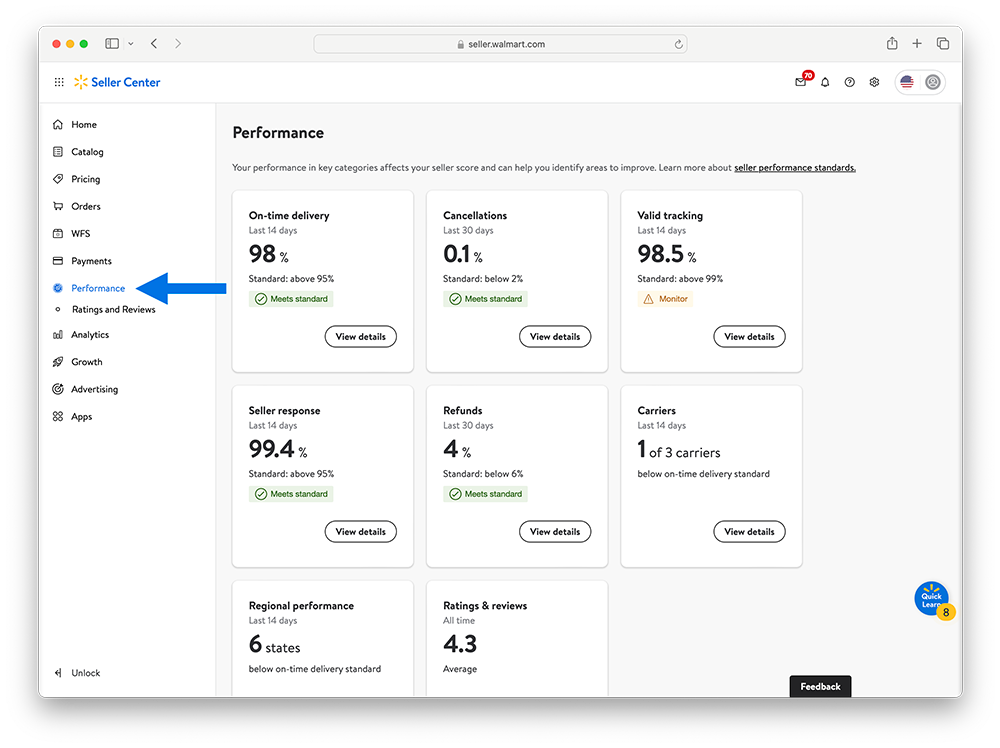
The 1P and 3P sides have different versions of walmart seller center with very different levels of data access. On the 3P side, you get sales rank, impression rank, click rank, add-to-cart rank, and item-level search query data. These tools are not available to 1P suppliers at all. (Source: The Marketplace Code Episodes)
3P sellers also have access to a granular listing quality score (LQS) that gives actionable feedback on every walmart product listing in their catalog. Use these dashboards actively. Brands that ignore this data are the ones losing share to competitors who do not. For a deeper dive on how listing quality drives visibility and rankings, see SellCord's guide on how to achieve Pro Seller status on Walmart.
4. Evaluate Walmart DSV vs. Marketplace 2026: The Legacy Supplier Question
If you are a legacy DSV supplier, the platform landscape has shifted considerably. Walmart has been moving away from the DSV model in favor of 3P marketplace, and many DSV suppliers are already being transitioned or encouraged to migrate. DSV was, in many ways, the original marketplace model before marketplace existed. It gave suppliers some of the operating feel of 3P, with orders coming in and shipping going out, but without the pricing control, the tools, or the reporting. (Source: The Marketplace Code Episodes)
If your DSV shipping speed is inconsistent, or if you are seeing conversion drop in regions far from your warehouse, that is a signal to run the numbers on WFS. Even if you need to raise your price slightly to cover WFS fees, winning back faster shipping and higher conversion often more than offsets the cost. For a complete overview of Walmart's marketplace programs and seller requirements, the Walmart Marketplace Learn seller education hub is the authoritative reference.
5. Leverage 3P to Support Your 1P Business
This is the strategy that separates the top performers from everyone else on walmart marketplace. 3P is not just an alternative to 1P. For suppliers already in stores, it is an accelerant for the entire brand.
Brands use 3P to expand their assortment online without requiring Walmart to buy the inventory. If you sell one SKU in-store, you can list your full product line on 3P and capture every customer who searches your category, not just the ones looking for your single store item. Share of voice on the digital shelf works the same way it does in a physical store aisle. More listings from your brand mean more dominance when someone searches that category keyword. (Source: The Marketplace Code Episodes)
3P also gives you geographic demand data. If you are using WFS and you have two-day shipping across the US, you can see which regions are converting at the highest rate. That data becomes real leverage when you sit down with your merchant for a line review and push for a store expansion or an increased initial purchase order. (Source: The Marketplace Code Episodes)
6. Use 3P to Prove New Products Before Pitching to Merchants
One of the most underused strategies on walmart marketplace is using 3P as a product incubator. If you have an item you believe should be in stores but your merchant is not yet convinced, do not wait for the next line review to build your case from scratch.
Launch it on 3P first. Drive sales. Build reviews using the Walmart Review Accelerator Program. When you walk into that line review with real walmart.com customer data proving the item sells, you are not asking Walmart to take a risk. You are showing them a proven product. Merchants can use your 3P sales data to inform store allocation decisions, because the online customer base and the in-store customer base overlap significantly. This approach also lowers Walmart's inventory risk on their initial buy, because they already know online demand exists.
7. Pull the 3P Growth Levers That Do Not Exist on 1P
This is the most concrete reason many 1P suppliers add a 3P channel alongside their existing business. The toolkit available to a walmart third party seller simply does not exist on the supplier side.
Promotions: As a 3P seller, you control your retail price, so you control your own promotions. You can run a strike-through price on any item at any time. Walmart's flash deals program gives 3P sellers added exposure within a dedicated deals section on walmart.com, and Walmart sometimes offers commission discounts when you participate, meaning you are not always fully funding the promotion yourself.
External traffic: Walmart Marketplace has built tools that allow you to drive Google SEM traffic directly to your listings. You fund the spend and Walmart manages the Google Shopping ads pointing to your items. There are also creator programs, including Walmart's creator boost, that let you set commission rates for content creators who promote your products, with payment only on actual sales driven. (Source: The Marketplace Code Episodes)
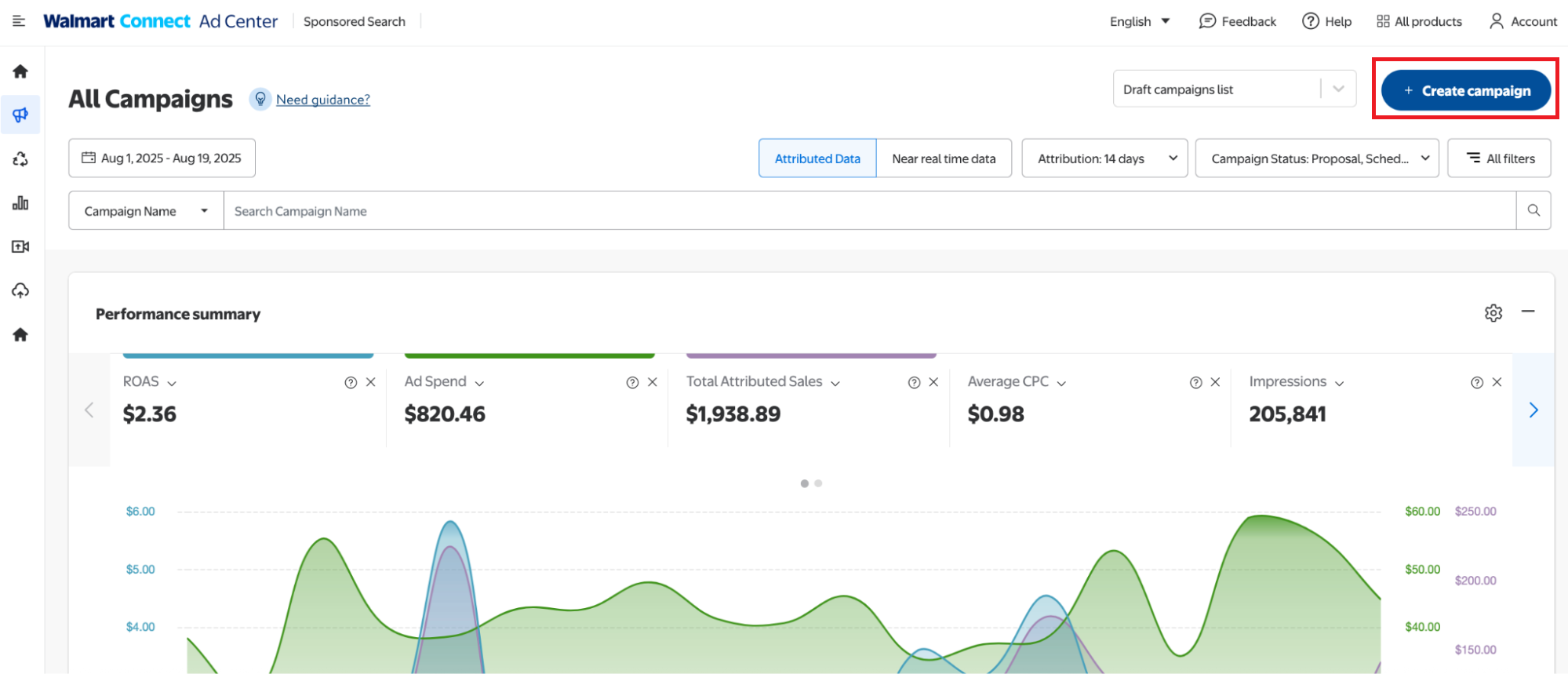
Advertising: Walmart Connect offers sponsored products, display ads, and other ad formats that give 3P sellers full retail control over their campaigns. These tools are not available with the same flexibility on the 1P side, making them an exclusive advantage for brands who invest in the marketplace channel.
Common Walmart 1P vs. 3P Mistakes to Avoid
Assuming 1P and 3P are mutually exclusive. Most successful brands run both. The question is not which one to pick and walk away from the other. It is how to structure them so they work together and each channel amplifies the other.
Ignoring retail price conflicts. If you sell an item to Walmart under 1P and Walmart sets a price below your MAP, that pricing action can suppress your walmart buy box on Amazon and other channels. Know your price risk before signing any supplier agreement for a given item.
Launching 3P without understanding fulfillment. A walmart marketplace seller who ships slowly loses visibility in search, loses the buy box, and sees conversion drop quickly. Do not go seller-fulfilled on 3P if your warehouse cannot support consistent two-day delivery windows. Use WFS if you cannot.
Staying in DSV by default. Many legacy suppliers are still on the drop ship vendor model because that is what they set up years ago. Evaluate honestly whether your current DSV shipping coverage and speed is competitive with 3P WFS sellers in your category. If it is not, the transition math is worth running.
Skipping the 3P data tools. The sales rank, impression rank, and listing quality score data inside walmart seller center are not available to 1P suppliers. If you have a 3P account and are not using this data to optimize your catalog, you are paying the referral fee without capturing the full value of the channel.
Frequently Asked Questions About Walmart 1P vs. 3P
Should I be a Walmart 1P or 3P seller?
Most brands benefit from operating both. 1P works well for proven, high-velocity items where Walmart is willing to buy inventory and you are comfortable with their price control. 3P works well for expanding your assortment, testing new products, protecting retail pricing across other channels, and accessing the growth tools that only exist on the marketplace side. The right answer depends on your category, catalog size, and operational bandwidth. In walmart 2026, the most competitive brands are using both channels intentionally.
What are the 3P levers on Walmart Marketplace that 1P does not have?
As a walmart marketplace seller on the 3P side, you can run promotions and flash deals independently, drive Google SEM traffic to your listings, participate in creator-driven campaigns that pay only on sales driven, access granular sales rank and listing quality score data at the item level, and use Walmart Connect advertising with full retail control. None of these tools are available with the same flexibility on the 1P supplier side.
What is the difference between Walmart DSV and Walmart Marketplace in 2026?
DSV (Drop Ship Vendor) is a legacy 1P model where Walmart owns the retail price but routes each order to you for fulfillment from your warehouse. Walmart Marketplace (3P) is the newer model where you own the retail price and fulfill through WFS or your own channels. Walmart has been moving investment and seller tools toward 3P marketplace, and many DSV suppliers are transitioning or being encouraged to evaluate marketplace as the stronger long-term path for their walmart ecommerce business.
How much does Walmart charge in referral fees for 3P sellers?
Walmart's referral fees for 3P sellers typically range from about 8% to 15%, depending on the product category. The exact rate varies by category. Walmart publishes a full category-level fee schedule at marketplace.walmart.com. In addition to the referral fee, 3P sellers who use WFS pay fulfillment fees based on item dimensions and weight.
Can I use 3P to get my product into Walmart stores?
Yes, and this is one of the most strategic uses of the walmart marketplace 3P channel. By launching an item on Walmart Marketplace, building sales velocity, and gathering real walmart.com customer data, you create a proof case for your merchant that the product has genuine demand. That data can directly support a store placement conversation at your next line review and reduces the inventory risk Walmart takes when they make an initial purchase. Merchants can also use regional 3P sales data to inform where to place the product in-store. (
Conclusions
There's no universal answer to the 1P vs. 3P question, but the brands winning on Walmart.com have stopped treating these channels as competitors. 1P gives you supply chain presence and a guaranteed cost-per-unit relationship. 3P gives you pricing control, item-level data, and growth tools that simply don't exist on the supplier side. Run both intentionally and you build a channel structure that's harder to displace and gives you real leverage with Walmart's merchants.
The brands performing best in 2026 are treating 3P as an investment, not an afterthought.
Want expert help building your Walmart channel strategy? SellCord's team of Walmart specialists works with brands at every stage, from structuring your first listing to scaling a full 1P and 3P presence. Click here and talk to the team today!